

Over the last 2-3 years, we tested many strategies to understand how brands appear in AI platforms and LLM results.
We ran experiments across websites, SERPs, social platforms, press releases, and listicles. We tracked what worked, what failed, and what consistently influenced AI citations.
This guide is not a theory. It is a practical playbook built from real tests and real results we generated for our clients. Every step you see here comes from patterns we observed while helping brands get mentioned, cited, and trusted by Google AI Overviews and LLM platforms.
Before you apply any strategy, you must first understand how AI platforms see your brand today. That baseline decides what to fix, what to strengthen, and what to scale next.
Let’s get started →
What’s covered:
Know how search engines and LLM platforms see your brand
Start by checking what search engines and LLM platforms already know about your brand. Here’s how you can do it:
For Google:
Search your brand name on Google and check the SERP. See if Google shows your official website, social media profiles, tweets, YouTube videos, or Instagram posts.
Also, search for these queries:
- Who founded {your_brand_name}?
- Where is {your_brand_name} based?
- When was {your_brand_name} established?
- What services does {your_brand_name} offer?
Here are SERP screenshots for a brand:
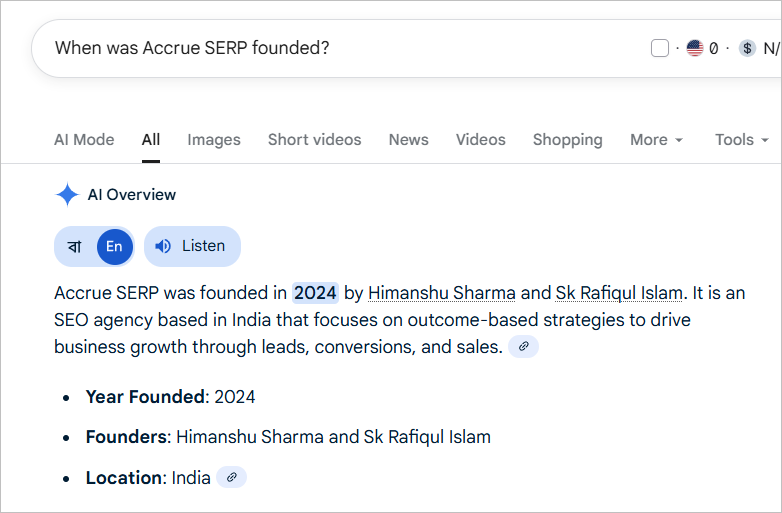
Another one:
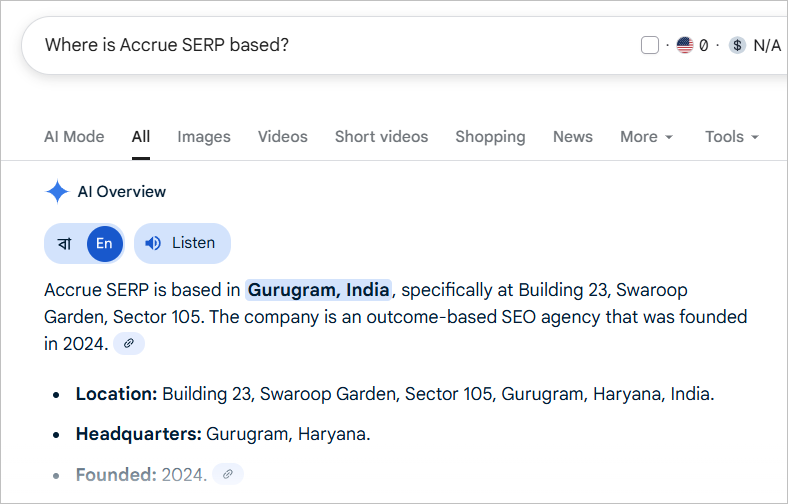
Take it a step further by checking the related entities Google associates with your brand. Go to the Images tab and look at the related search suggestions.
The more closely these entities align with your brand, the better. In our case, Google suggests SEO agency, SEO services, Backlinks, and SERP SEO as related entities — which is exactly how we want our brand to be recognized.

The similar tests you should perform in different LLM platforms, such as Perplexity, ChatGPT, Claude, etc.
Here’s what ChatGPT returned when I asked, “What do you know about Accrue SERP?”
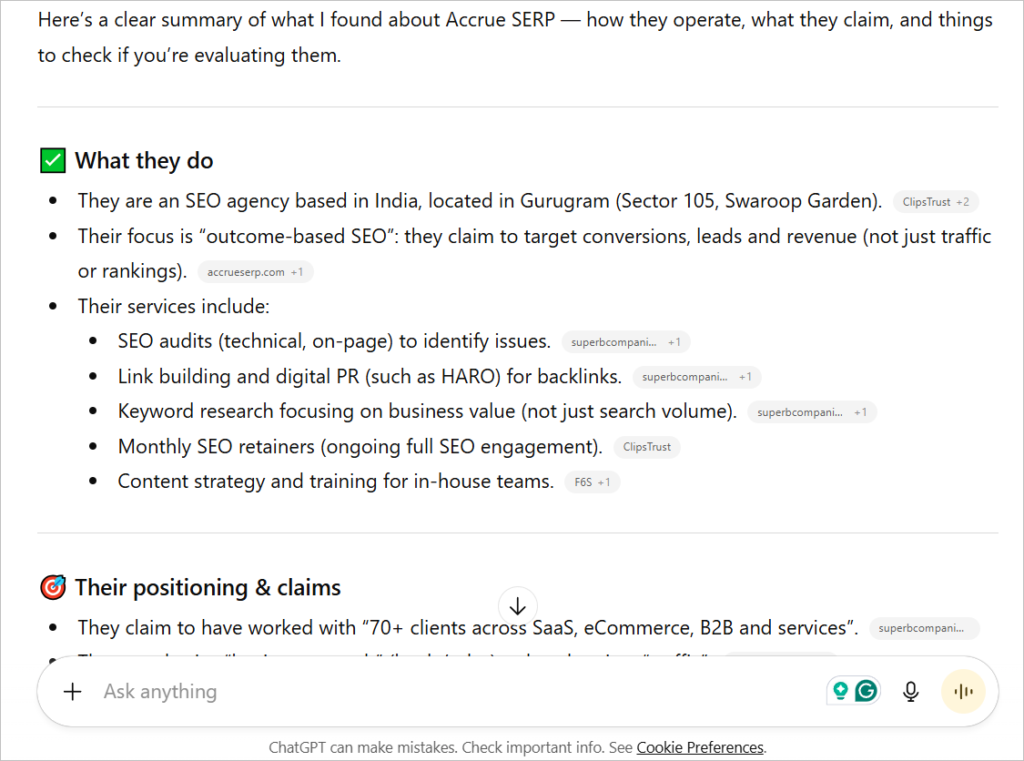
The goal is to understand how well Google and AI tools recognize your brand as an entity. The more accurate and detailed the information shown in featured snippets, chats, or AI overviews, the better.
NOTE: If your brand fails in this initial test, don’t worry. We will show you the exact steps to train AI models about your brand later in this guide.
Understanding your competitors
Whatever niche you’re in, people search for the ‘best X products/companies’ on Google and LLM platforms. So, you want your brand to be featured/cited in those LLM platforms as much as possible for different commercial keywords.
Start by listing your top commercial search queries that include “best X services” or “best X products.”
For an SEO agency, search queries could be like:
- ‘Best SEO agencies in India’
- ‘Best SEO agencies in Gurgaon’
- ‘Best link-building agencies in India’
- ‘Who are the top SEO experts in India?’
- ‘Top 10 content marketing services’
Once you come up with these commercial listicle queries, check them in LLM platforms such as:
- ChatGPT
- Perplexity
- Claude
- Gemini
- (or your preferred ones)
Now create a document and note down the most commonly appearing brands and what are the sources that feature these brands.
Here’s one example:
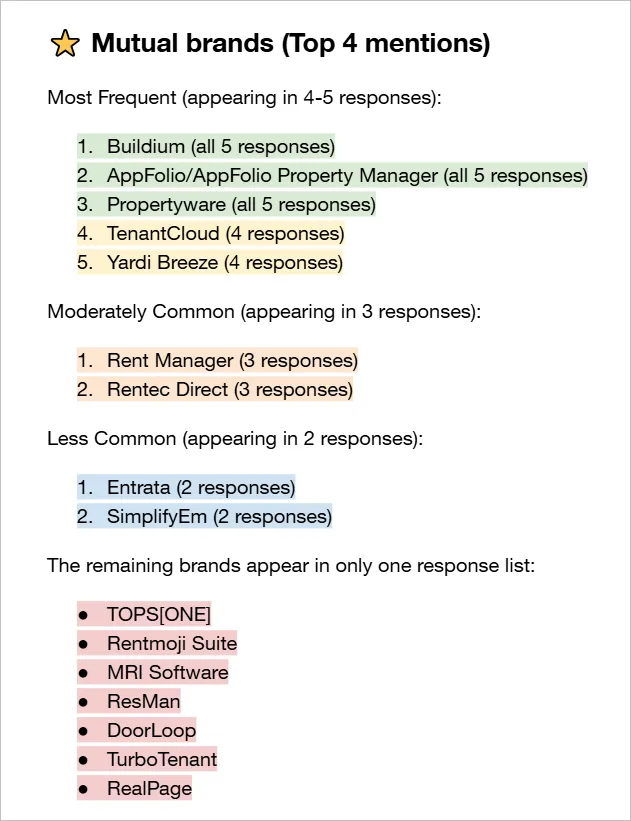
You should also note down the source websites cited in LLM responses.
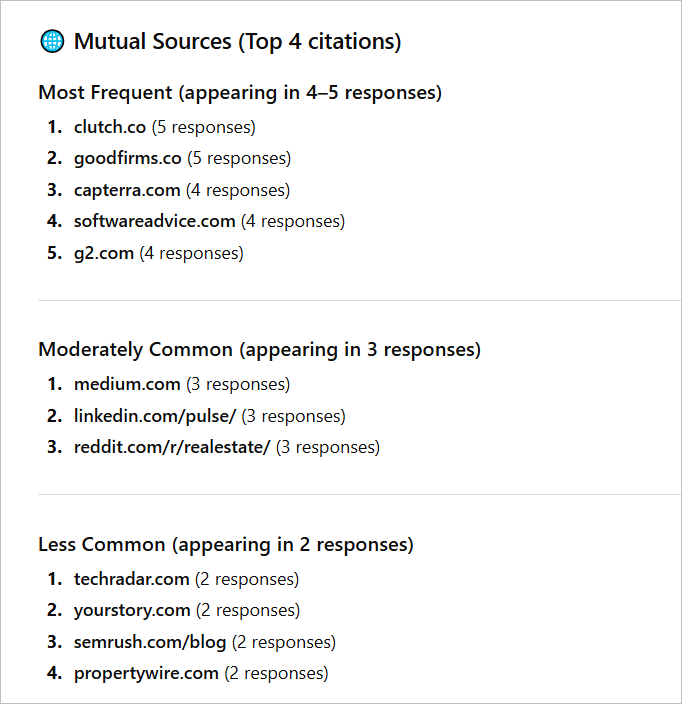
These source URLs and the most frequent brand names will help you understand where your brand currently stands compared to leading brands in LLMs. You can also plan to get your brand featured on those source URLs later.
Action items
Step 1: Start with the website optimization to strengthen your brand signals for LLMs
The first and foremost place to start optimizing for AI overviews and the LLM platform is your website. This includes updating your core pages, such as:
1. Home page
The homepage defines your brand position. It tells search engines and LLMs how you want your brand to be seen. This page must show a clear, simple, and consistent message about who you are and who you serve.
If you run an HR software company, your homepage may show positions like:
- Most affordable HR software
- HR software for enterprises
- HR software for manufacturing companies
Remember: Whatever position you choose, keep it the same on: Your homepage, Social media bios, Press releases, Directory listings, Guest posts, UGC platforms
When your brand message stays the same everywhere, LLMs receive many clear signals. This helps your brand appear in relevant AI overview answers. For example, if all your channels show that your product is “HR software for enterprises,” LLMs will start citing your brand when users ask for “best HR tools for enterprises.”
Action items:
- Use a short and clear page title that states your exact position. Example: “Best HR Software for Enterprises | {Brand Name}”
- Your H1 and first H2 must repeat your core positioning. This helps both crawlers and LLMs understand your identity.
- Add the same brand description, services, and positioning in your Organization schema or WebPage schema. Keep it consistent with your About page and social bios.
- (Optional experiment) Use your homepage target keyword as anchor text in your footer. For example:
- Anchor: “enterprise HR software” → Link: Homepage. This builds internal context and helps LLMs learn how you want your brand to be known.
2. About page
Your About page is a major source of truth for LLMs. When users ask questions about your brand’s founding year, founders, location, or mission, AI platforms often use the About page to answer them.
What to include on the About page
Introduce the team with names and designations: This helps AI understand the people behind the brand and increases entity clarity.
Share why you started the company: A simple origin story gives context and helps AI connect your brand with your mission.
State your USP and what makes you different: Make it short and clear. This supports your positioning across AI platforms.
Add factual details:
- When the company started
- Who founded it
- Where you operate
- What industry do you serve
Explain what your product or service does: This helps AI match your brand with the right commercial categories and search queries.
Describe the problem you solve: LLMs often include this in summaries and recommendations when someone searches for “Is Brand X reliable?”,“What does Brand X actually do?”, etc.
Use the same brand positioning as your homepage: If you position yourself as “HR software for enterprises” on the homepage, keep the same description here.
Do not switch to unrelated or inconsistent positions like “HR tool for UAE” unless that is your primary focus. Inconsistent messaging weakens entity signals and may reduce your chances of appearing in AI citations.
💡 Tip: Use the About page as a trust-building section. Add information that shows credibility, such as achievements or recognitions. This helps LLM platforms treat your brand as reliable when pulling data for AI overviews or commercial queries.
3. Contact us page
Your visitors want a fast way to reach you. So keep your key contact details clear and easy to find. Many brands lose trust because they hide phone numbers or skip their address.
An example: 👇
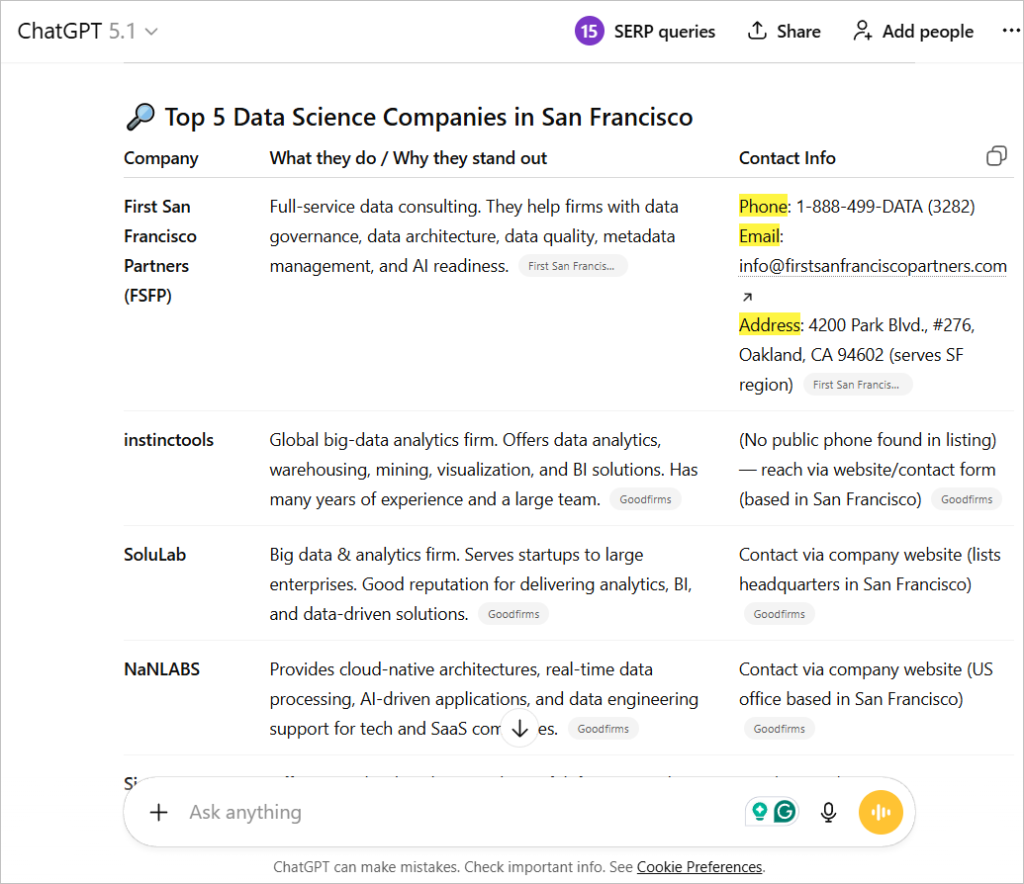
When I searched for the best data science companies with contact details, only one brand stood out because it showed the same phone, email, and address on both the footer and the contact page.
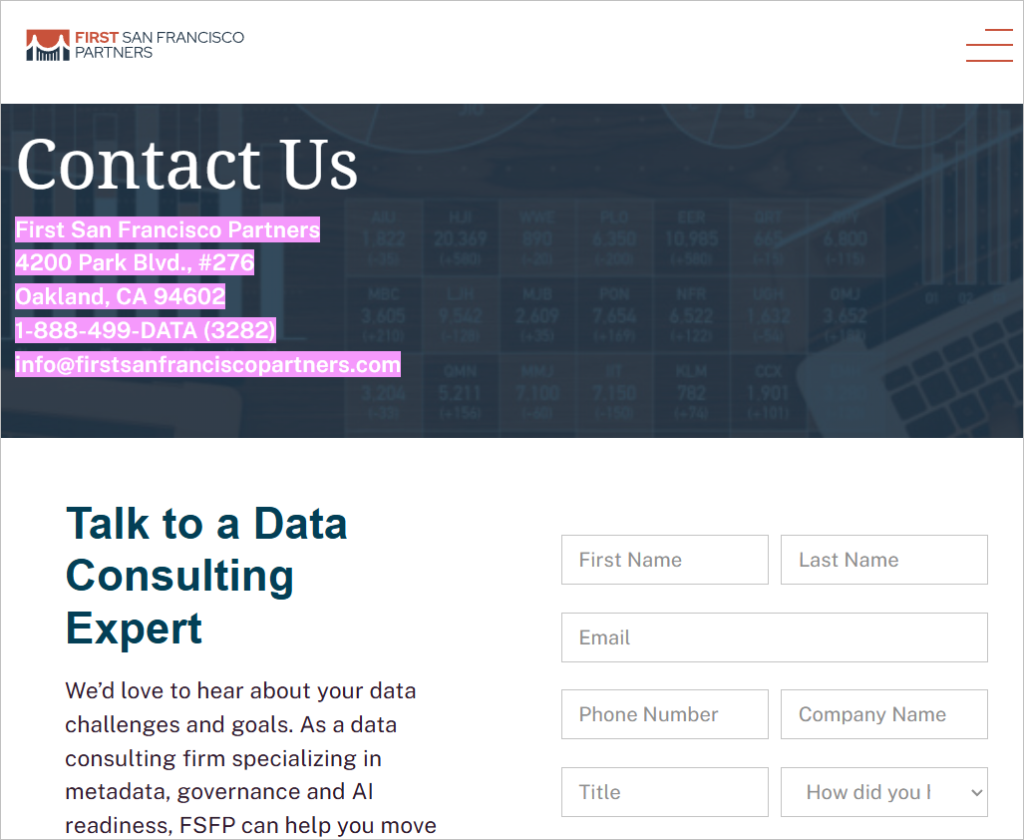
Consistent name, address, and phone number across your website, directories, and citations also helps LLM platforms show correct brand information. This makes your company easier to discover and trust.
- [Your Company Name]
- [Full Address Line 1]
- [City, State, ZIP]
- [Your Phone Number]
- [Your Email Address]
Note: Instead of either using contact details or a contact form, I recommend adding both on the contact page for better clarity and faster conversions.
4. FAQ page
If your brand has little or no online presence, search engines and large language models (LLMs) may return inaccurate or no information about it.
This happens because your brand is not yet recognized as a known entity.
Want to check?
Run these search queries (not limited to) in ChatGPT and Google AI overview:
- 1. Tell me what you know about {brand_name}
- 2. What does {brand_name} do?
- 3. When was {brand_name} founded?
- so on…
Without enough consistent data across trusted web sources, search engines or LLMs fail to understand or reference your brand correctly.
An FAQ page acts as your first knowledge base.
It defines your core identity and builds entity-level associations between your brand and related elements like founder, services, locations, and partners.
Here’s an example of how an FAQ page provides context about your brand to crawlers and LLMs:
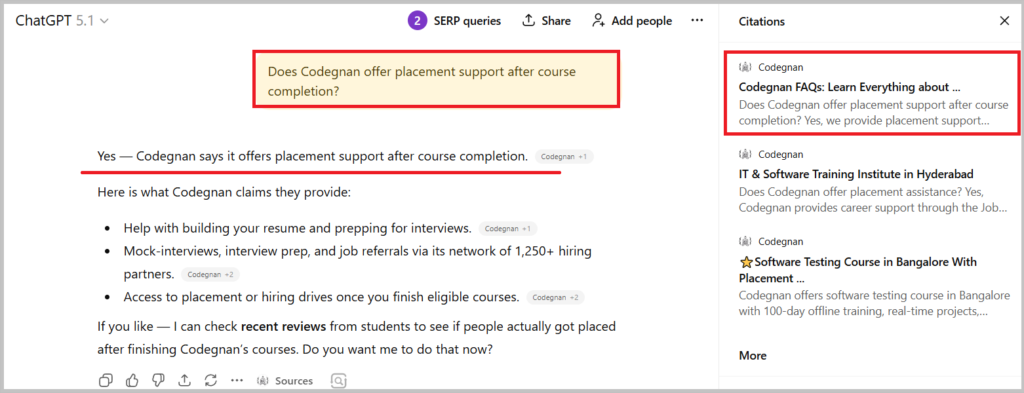
Create your FAQ page by answering questions like:
- What is [Brand Name]?
- What services or products does [Brand Name] offer?
- Who is the founder of [Brand Name]?
- When was [Brand Name] founded?
- Is [Brand Name] trustworthy?
- And cover other elements like pricing, awards/recognition, etc.
5. Reviews and pricing page
Optimizing for LLM in SEO is not only about targeting commercial intent keywords. It also ensures your brand appears with accurate information during branded searches. Branded search queries about pricing and reviews play a key role in helping a lead decide whether to become a customer.
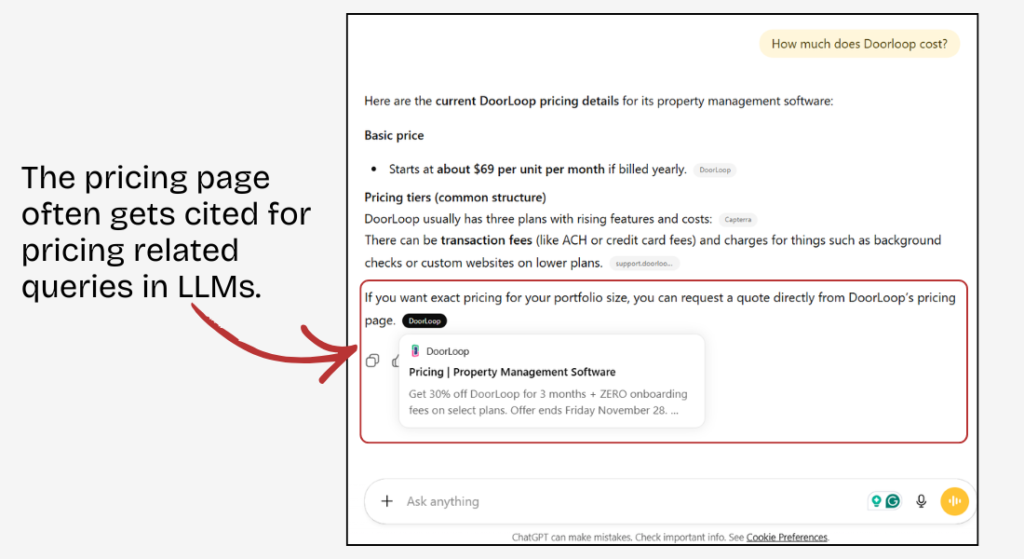
Step 2: Brand consistency across all social platforms
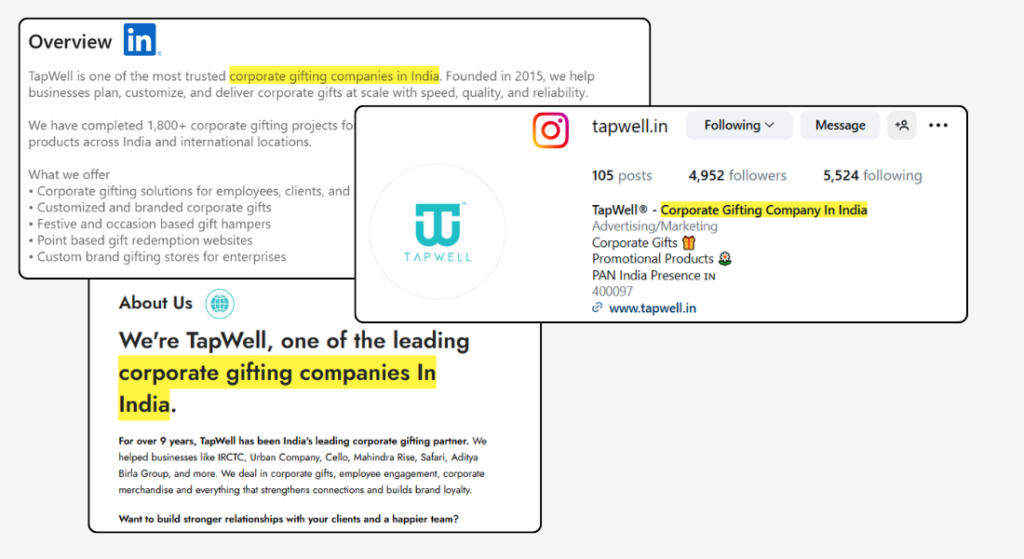
Search engines and LLMs do not learn about your brand from your website alone. They also read social media profiles to understand who you are, what you do, and how consistent your brand message is.
Use the same brand positioning everywhere:
Every social platform must describe your brand in the same way. Your bio or company description should clearly state:
- What your brand does
- Who your brand serves
- Your main positioning
Example: If your position is HR software for enterprises, use the same phrase on:
- LinkedIn company page
- X Twitter bio
- Instagram bio
- Facebook page
- YouTube About section
If you focus on multiple positionings, you dilute your relevance for the main target keyword.
Do not change wording across platforms. Even small wording changes confuse LLMs. Consistent language helps AI tools connect all your profiles to one clear and strong brand identity.
Optimize bios using simple NLP friendly text:
Write bios in plain language. Avoid slogans or creative taglines.
- ✔️ Good bio example:
“HR software for enterprises. We help large teams manage payroll, compliance, and employee data.” - ❌ Bad bio example:
“Powering the future of work.”
Clear and factual bios help LLMs extract correct brand information for AI overviews and brand related queries.
Claim all social media handles:
Even if you do not post often, claim your brand name on all major platforms.
This includes:
- X Twitter
- YouTube
- GitHub
- Product Hunt
Link everything back to your website homepage, not specific product page:
Every social profile should link to your official website. Use the same URL format everywhere. This helps search engines and LLMs connect all profiles to one main source of truth.
Here’s an example of brand positioning consistency:
Step 3: Publish press releases to train AI models and search engines
When you publish a press release on a recognized media or news platform, the content rarely stays limited to that single website. Most press releases get syndicated, republished, or quoted across many other sites.
This process spreads your brand information at scale, including:
- Your brand name
- Your core services or products
- Your business location
- Your target market
- Your main positioning
Because this information appears repeatedly across trusted domains, AI models and search engines learn your brand context faster and with more accuracy.
Free and paid press releases both add value
Free press releases help establish baseline visibility and brand mentions across the web. Paid press releases extend this reach to higher authority news and media outlets.
Both types contribute to:
- Wider brand distribution
- Faster indexing by search engines
- Stronger entity level recognition
Paid placements also increase the chances of being cited, referenced, or surfaced in news based search features.
Visibility through Google News:
Press releases published on credible platforms may appear or get referenced in Google News. This adds an additional trust layer and helps your brand become part of the news ecosystem that AI tools often rely on for fresh and reliable information.
Each press release should clearly and consistently include:
- Your brand name
- A single positioning statement
- Services or products offered
- Target location
- Official website link
- A short factual company overview
Step 4: Be everywhere with listicles
Listicles strongly influence how AI tools and LLM platforms answer commercial searches. When someone asks for “best X software” or “top X companies,” AI systems usually pull brand names from listicle style articles that already rank or get cited.
If your brand appears in those lists, AI tools are more likely to include you in their answers.
How AI uses listicles for commercial queries:
For most commercial searches, AI tools do not create recommendations from scratch. They look for existing articles that already group and rank brands.
These are usually:
- “Top 5” articles
- “Best tools” comparisons
- Industry roundups
The brands that appear most often in these lists are treated as trusted options. Your goal is to place your brand inside the same lists that AI already reads.
1. Find listicles that rank for your keywords
Start with Google. Search your main commercial queries, such as:
- Best property management software
- Top HR software for enterprises
- Best corporate gifting companies in India
Check the first 5 to 10 pages. Note down all listicle articles you see. If many listicles rank for a query, assume AI tools are also using them as sources.
2. Identify competitor coverage gaps
Now review each listicle and note:
- Which competitors are listed
- Whether your brand is missing
These gaps show exactly where you need to get featured. Reach out to these websites and request inclusion. Some accept free additions. Others charge a fee. Both options work.
Being listed alongside competitors helps AI tools understand that your brand belongs in the same category.
3. Publish listicles on UGC platforms
You do not need to wait for publishers. You can create your own listicles on platforms that Google indexes. Leverage free UGC platforms such as:
- Medium
- LinkedIn pulse
- Peerlist
- Instagram posts or reels
- Slideshare presentations
- YouTube videos
Create simple listicle content like:
- “Top 5 property management software tools”
- “Best HR software for enterprises”
Include your brand with a clear description and positioning. Even Instagram posts and videos get indexed and help feed brand context to search engines and AI tools.
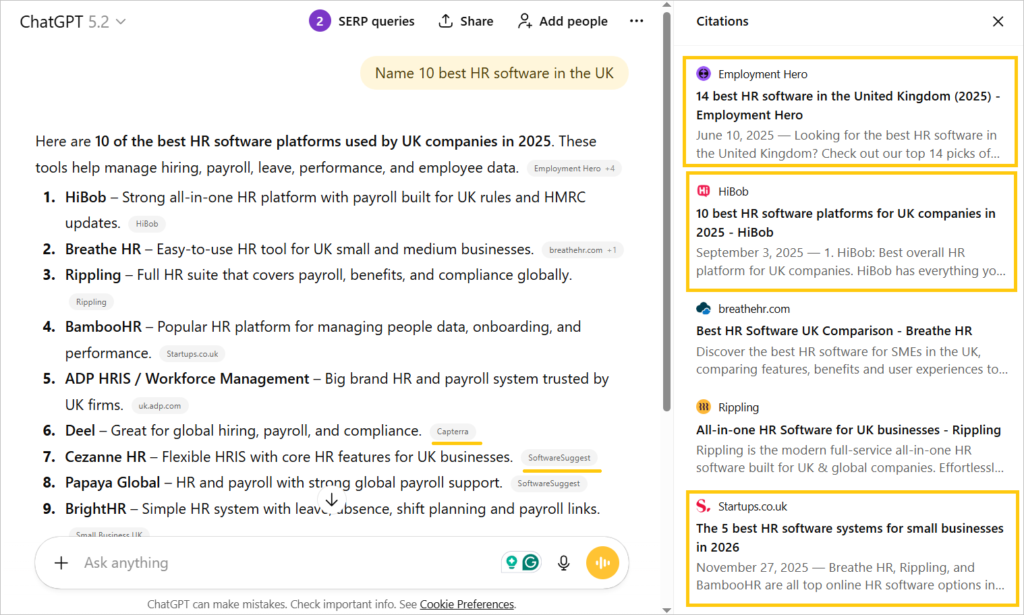
4. Check LLM platforms for citation sources
Search your target listicle query directly in ChatGPT or other LLM platforms. Look at:
- Which brands appear
- Which websites are cited as sources
These cited websites are priority targets. Get your brand listed on those same sources. This directly increases your chances of appearing in AI generated answers.
5. Publish listicles on your own website
Create listicle content on your website to strengthen topical authority. You can:
- Publish comparisons
- Create “best tools” pages
- Cover alternatives in your niche
Add clear NAP details (where possible):
- Brand name
- Address
- Phone number
- Website
You do not need to feature your direct competitors if you prefer not to. The main goal is not comparison for users alone, but entity clarity for search engines. These pages tell Google and AI tools what category you belong to and what problems you solve, which improves relevance and trust over time.
6. Convert unlinked mentions into linked mentions
Some listicles may already mention your brand without linking to your website. Reach out and ask them to:
- Update your company description if needed
- Add a link to your relevant page
This is also important if you have rebranded your company to a new name. Many websites, listicles, or citations may still mention your old brand name or link to your old website. These outdated mentions confuse search engines and LLMs and weaken your current brand signals.
Some listicles may already mention your brand without linking to your website or may use an old description. Reach out and ask them to:
- Update the brand name if it has changed
- Correct the company description if the positioning is outdated
- Replace old URLs with your current website link
- Add a link to the most relevant page
Step 6: Build support content to control your brand narrative
SEO no longer works if you focus only on your website. Search engines now evaluate your brand across many channels. In 2026, brands with an active presence beyond their website perform better in Google results and AI answers.
Last year, we made a major change to our SEO system by expanding beyond websites and text content. We started offering social media management services for our clients.
How it all started:
Before the ChatGPT era, we achieved great results by focusing only on websites through both on-site and off-site SEO.
But soon, we realized that SEO alone doesn’t work if you only focus on your website and ignore your overall brand presence on the web.
However, many of our B2B and local business clients had little to no social media presence.
Earlier, we relied on clients or third-party freelancers for social media management, which didn’t work for us.
It led to limited content output, missed deadlines, and inconsistent brand messaging.
So we decided to integrate social media into our SEO system.
That’s why we built a dedicated social media team focused on strengthening brand presence. (One key metric we now track is branded search growth and social media traffic)
The highest ROI we generated was from investing in video content for our clients. This helped us increase branded searches and rank for more commercial keywords in Google SERP through videos.
Here’s how:
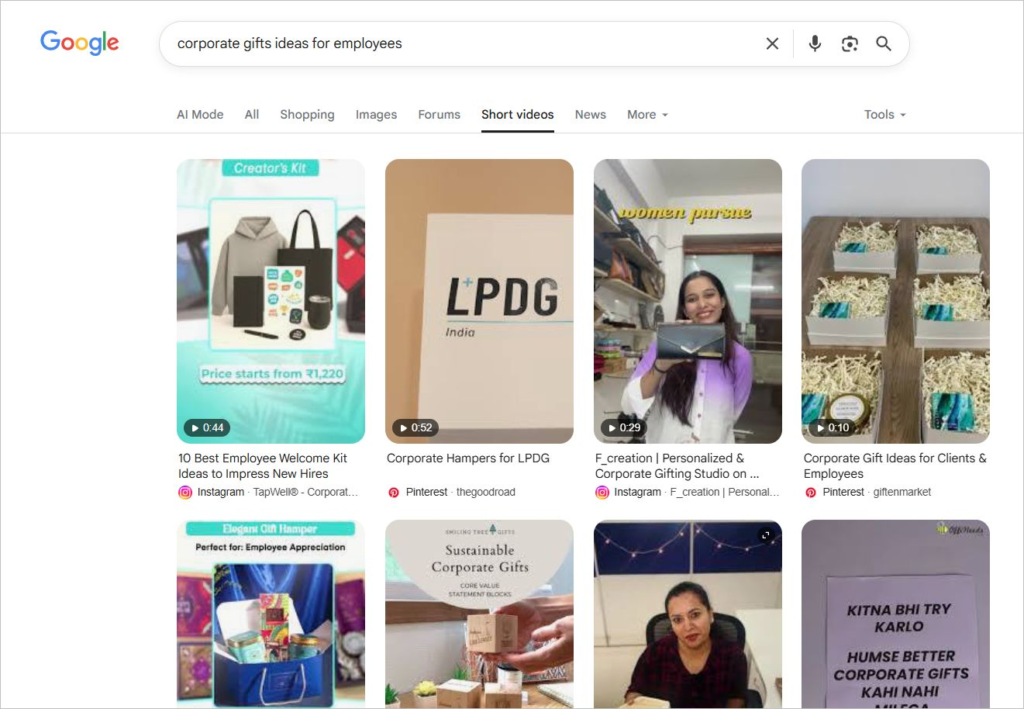
- Google now ranks Instagram reels and YouTube shorts for many queries (including informational and local commercial search queries).
In fact, the SERP now has a dedicated Short Videos tab.
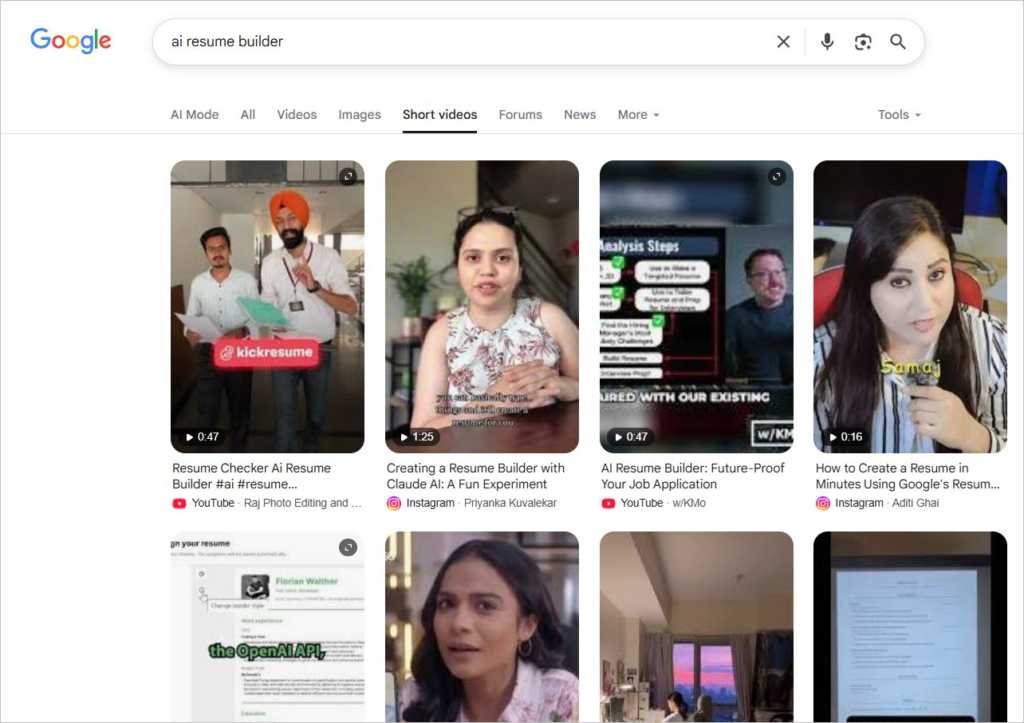
Another example:
Our strategy was:
- Find search queries that trigger video (long or short form) content in the SERP
- Prioritize the keyword list by intent (start with commercial keywords)
- Create short videos and distribute across all social media channels
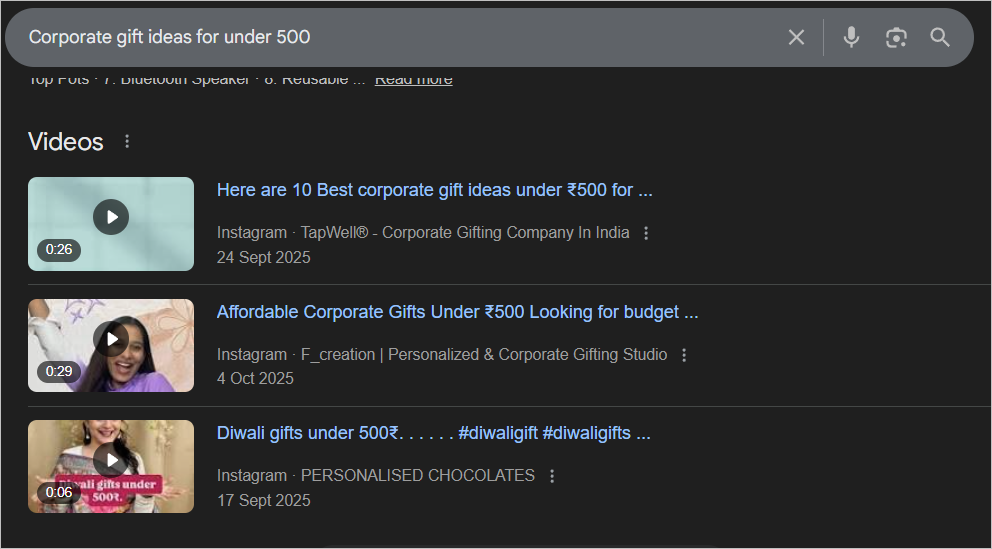
These video contents get indexed, generate a good number of views on YouTube, and rank in Google’s short videos tab.
So, start by creating simple service introduction videos. These videos should clearly explain what your service does, who it is for, and what problem it solves. Publish these videos on platforms that search engines index, such as:
- YouTube
Next, distribute the same videos across other UGC video platforms that get indexed. Reuse the same content instead of creating different messages. This repetition strengthens brand signals.
You should also stay active on social media. Many B2B brands post rarely, which weakens brand trust. You do not need to post daily, but you must stay consistent and useful.
Focus your content on:
- Explaining your services
- Answering common questions
- Sharing short educational videos (reels vis YouTube and Instagram)
One example of our short video is ranking in the Google SERP for the search query: Corporate gifts under 500
Tip: One practical way to increase branded searches is through job postings.
If your company has active openings, distribute them on platforms like LinkedIn and other job portals. Instead of sharing an email or phone number to apply, ask candidates to Google your brand name and visit the Careers page on your website.
This approach encourages users to:
- Google your brand name directly
- Search your brand with a location or role
When many people search your brand name every month, Google receives a clear signal that users are actively looking for your brand. This can support stronger visibility and rankings.
We tested this approach ourselves. We tracked brand name impressions and clicks in Google Search Console before and after distributing job postings. The branded search volume increased steadily over the following months.
Branded search demand is one of the strongest signals of real brand growth in SEO.
Final words
If you want to show up in AI overviews and LLM platforms, you need to make it easy for search engines and AI tools to understand your brand.
This guide explains how we help our clients get cited in AI answers and overviews. The approach works well for new brands and brands with low branded search demand.
The first step is always to check what Google and AI platforms already know about your brand. Simple SERP checks and AI queries quickly show whether your brand is understood correctly or not. Any gaps you see here guide the rest of the work.
The strategy focuses on a few clear areas:
- Your website must clearly explain who you are and what you do
- Your brand position must stay the same across all platforms
- Press releases help spread your brand details at scale
- Listicles help AI decide which brands belong in a category
- Your own listicles help define your niche
- Unlinked or outdated mentions need to be fixed
- Video and social content support branded searches
Consistency matters at every step. When your brand message stays the same everywhere, AI tools can connect all signals into one clear identity.
SEO in 2026 is driven by brand demand. When people search for your brand name and engage with your content, Google is more likely to trust and rank your brand for commercial queries.
This is how we help brands become visible, trusted, and cited across search engines and AI platforms.